
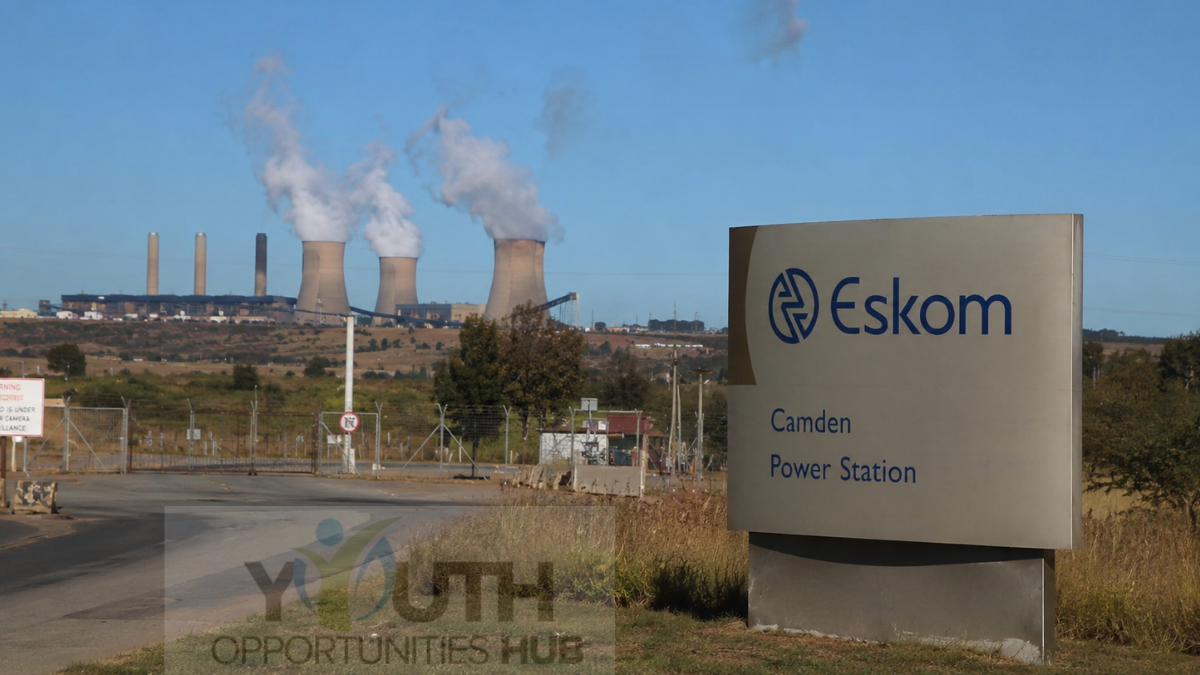
Eskom Sabotage Case: Former Contract Worker Sentenced to 35 Years for Camden Power Station Damage
A former Eskom contract worker has been sentenced to 35 years in prison for sabotage and theft at Camden Power Station in Mpumalanga, in a landmark ruling that highlights South Africa’s intensifying fight against infrastructure-related crime.
The Ermelo District Court sentenced 46-year-old Simeon Majaonke Shongwe after finding him guilty of tampering with essential infrastructure and theft linked to a 2022 incident that caused more than R22 million in damages at Camden Power Station. Although the combined sentence totals 35 years, the court ordered the sentences to run concurrently, meaning Shongwe will serve an effective 20 years behind bars.
What Happened at Camden Power Station?
According to Eskom and law enforcement investigations, Shongwe deliberately removed a bearing oil drain plug from a turbine used to generate electricity at Camden Power Station, a National Key Point located in Mpumalanga. The act caused repeated tripping of oil burners, drained critical oil from the turbine system, and severely damaged equipment required for power generation.
Investigators found that the sabotage ultimately caused Unit 4 at the power station to trip, disrupting operations and resulting in estimated damages exceeding R22 million. Evidence gathered during the investigation, including witness testimony and a confession, linked Shongwe directly to the incident.
Court Hands Down Heavy Sentence
On 26 January 2026, the Ermelo District Court imposed a 20-year prison sentence for tampering with essential infrastructure and an additional 15-year sentence for theft. The court ruled that the sentences would run concurrently, resulting in an effective 20-year prison term.
The case has been widely viewed as one of the strongest responses yet to criminal activities targeting South Africa’s electricity infrastructure.
Eskom Welcomes the Ruling
Eskom praised the court’s decision, describing it as a strong warning to individuals involved in sabotage, theft, and other criminal acts that threaten the country’s energy security.
Eskom Group Chief Executive Dan Marokane said the sentence demonstrates that attacks on critical electricity infrastructure will be met with severe consequences. The power utility emphasized that protecting power stations remains essential for maintaining reliable electricity supply to millions of South Africans.
The utility also acknowledged the role played by the South African Police Service (SAPS), the Hawks, prosecutors, and the National Joint Operational and Intelligence Structure (NATJOINTS) Energy Safety and Security Priority Committee in securing the conviction.
Why Infrastructure Crime Matters
Infrastructure sabotage remains a major challenge in South Africa, affecting electricity generation, service delivery, and economic productivity. Criminal activities targeting power stations, substations, cables, and other strategic assets can lead to costly repairs, operational disruptions, and financial losses for public institutions.
Major General Nico Gerber, Provincial Head of the Hawks in Mpumalanga, said tampering with essential infrastructure is a national problem that negatively impacts public services. He noted that the conviction should serve as a warning to anyone involved in similar crimes.
Eskom Strengthens Security and Investigations
As part of its broader anti-corruption and anti-sabotage efforts, Eskom has consolidated its forensic, security, and investigative functions into a newly established Group Investigations and Security Division. The division reports directly to the Group Chief Executive and is intended to improve governance, strengthen investigations, and accelerate action against criminal networks targeting the power utility.
The company says it will continue working closely with law enforcement agencies and national security structures to safeguard South Africa’s electricity infrastructure and protect the country’s energy future.
A Significant Moment in the Fight Against Sabotage
The Eskom sabotage case marks a significant milestone in South Africa’s efforts to combat infrastructure-related crime. The conviction sends a clear message that individuals who deliberately damage critical national assets can face lengthy prison sentences and severe legal consequences.
With electricity infrastructure playing a crucial role in economic growth and public service delivery, authorities hope the ruling will deter future acts of sabotage and strengthen confidence in the country’s justice system.